LinusBio’s ClearStrand hair test and a new Frontera partnership promise earlier autism detection, even as scientists question whether the biomarker is ready.
Key Takeaways
- The problem: Autism is still diagnosed late, at a median of just under four years, and families often wait months or years for an evaluation during the developmental window when early intervention matters most. That delay has fueled demand for objective tests that can flag risk far earlier.
- The response: LinusBio’s ClearStrand-ASD, a hair-based biochemical test now offered for children from one month to age ten, uses a metabolic biomarker to estimate a child’s likelihood of autism, and a forthcoming partnership with the AI autism company Frontera Health would package it into a roughly fifty-dollar-a-month early-detection program.
- The evidence: The company reports a negative predictive value of ninety-five per cent, drawn from a multinational study of roughly 1,700 children that stratifies autism likelihood from a single hair. The work is an early, proof-of-concept preprint not yet peer-reviewed, and the underlying technology holds an FDA Breakthrough Device Designation, though the test itself is not FDA-cleared.
- The path forward: The program’s reach will depend on details still being finalized and on whether payers come to reward earlier, lighter-touch intervention, even as peer-reviewed validation of the biomarker continues to build.
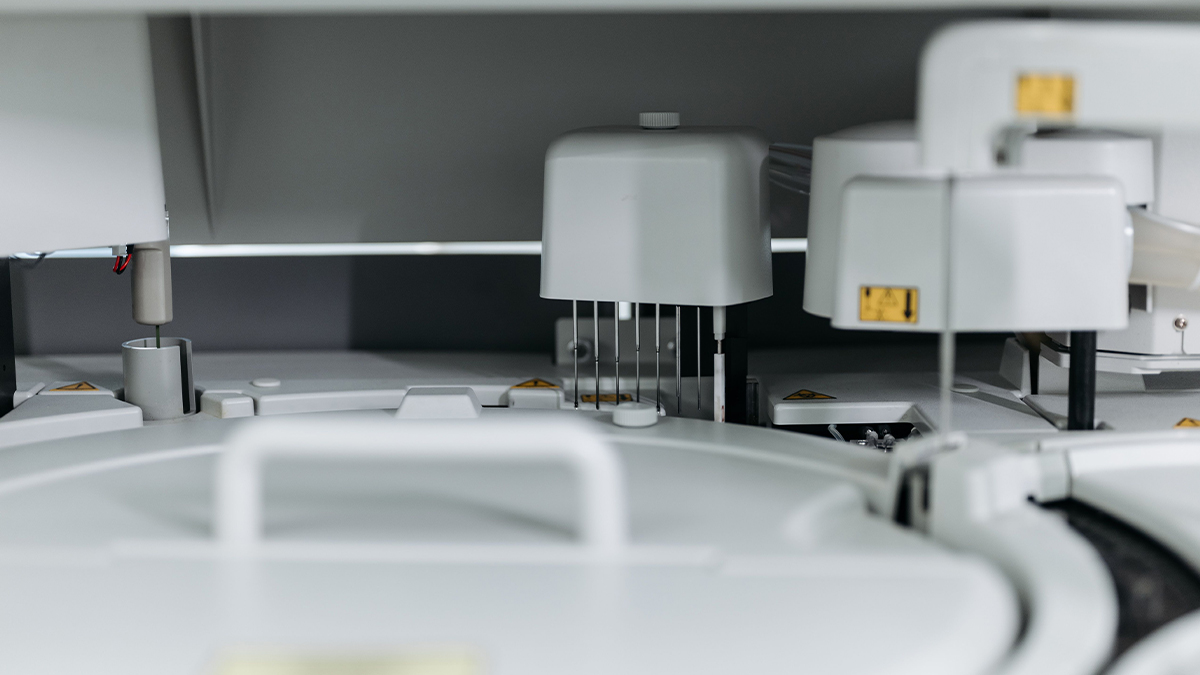
The machine begins with a single hair. Inside a laboratory in North Brunswick, New Jersey, a strand is straightened and then opened along its length, and a laser walks its surface the way a needle once tracked the groove of a record. Hair grows in small increments, roughly a centimeter a month, and into each new segment the body locks a chemical account of what it was absorbing and how it was managing the load. Dr. Manish Arora, the environmental epidemiologist who built the technology, calls a strand of hair “a biological hard drive.” Read it correctly, he told Acuity Media Network, and you can recover a person’s metabolic history month by month, reaching back before birth.
Arora is not a fringe figure. He is a professor and vice chairman of environmental medicine and public health at the Icahn School of Medicine at Mount Sinai, a recipient of a Presidential Early Career Award and of some twenty-five million dollars in federal research funding, and a leader in the field he practices: exposomics, the study of the totality of a person’s environmental exposures and the body’s response to them. Genes, he is fond of pointing out, are essentially static; measure them in childhood or in old age and you get roughly the same answer. The exposome is the opposite. It changes by the hour, and so does the body’s reaction to it. Most of medicine, he says, still relies on snapshots, the annual blood draw, the isolated data point, when biology is a continuous thing, closer to a symphony than to a photograph.
His company, LinusBio, a spinout from Mount Sinai, has turned that conviction into a product. Proprietary robotics straighten and open a hair, and a laser walks its length at roughly hourly resolution, taking hundreds of readings along a single month of growth. What the company’s machine-learning models mine from that stream is not raw concentration but the shifting levels of about a dozen elements, magnesium, calcium, lead and manganese among them, and, at the center of the hypothesis, the interplay of zinc and copper, which Arora describes as a kind of master regulator, a conductor of the body’s metabolic orchestra. In earlier work, Arora and his colleagues reported that the rhythm with which zinc and copper cycle through the body, the regularity and complexity of it, is blunted in autistic children. Autism, in this telling, is in part a disorder of elemental metabolism, legible in the hair.
The idea did not arrive overnight. Arora, the founder and Chief Executive of LinusBio, traces its foundations back some twenty years, to work on what baby teeth could reveal about early development, and dates his turn toward brain health to the middle of the last decade, at Mount Sinai. The harder problem, he told Acuity Media Network, was translation: carrying a finding from mouse models, where variables can be controlled, into a human diagnostic that has to survive the mess of real biology. That is the leap LinusBio claims to have made.
The Case for Earlier Autism Detection
The appeal is not hard to understand. Autism in the United States is still diagnosed much the way it was decades ago, through observation and questionnaires, part of what a broader push toward objective measurement in behavioral health is now trying to change. The diagnosis also tends to come late: the median age of diagnosis is just under four years, and only about half of children are identified by age three. When concerns surface, families often wait months or years for an evaluation, and the science on early intervention is comparatively settled: therapy begun in the first years of life, when the brain is most malleable, is associated with meaningful gains in language, cognition and social communication. Arora frames the mission in those terms, and rejects the notion that an earlier answer is a crueler one. The point, he says, is not to deliver bad news sooner but “to deliver hope sooner.”
The product built on that idea is called ClearStrand-ASD. It is a rule-out test: a negative result, the company says, means the autism biomarker was not detected and the child is unlikely to be on the spectrum, while a non-negative result means autism cannot be ruled out and the child should be seen by a specialist. It requires a single strand of hair, can be used in children as young as one month, and until recently was validated for children under four. In March, LinusBio extended that range to age ten, citing a multinational study of roughly seventeen hundred participants. The test retails for four hundred and ninety-nine dollars, includes a brief telehealth consultation, and is ordered through a physician the company connects families to. It is available in nearly every state.
ClearStrand’s Autism Biomarker: The Data and the FDA Question
In its marketing, the company leads with a negative predictive value of ninety-five per cent, and the study behind that number is not a small one. Posted this spring, it draws on roughly seventeen hundred children across the United States, Sweden, Mexico and Japan, and reports that the test clears the large majority of children who are not autistic. It is, by its authors’ own description, a proof of concept, a preprint now under review at a scientific journal and not yet peer-reviewed, which is where work of this kind usually begins.
The science is also more specific than the shorthand rule-out test suggests, in a way that speaks to how the company means the test to be used. The underlying study sorts a child into low, intermediate or high likelihood of autism. In a validation sample of roughly six hundred children, the low-likelihood tier cleared about ninety-six per cent of those who were not autistic, and LinusBio positions the tool less as a final verdict than as a way to triage long waiting lists, moving the children most likely to be on the spectrum toward evaluation sooner. Read that way, as a prioritization aid rather than a diagnosis, it offers something the field does not currently have.
Arora is quick to enumerate the diligence behind the test, and the list is substantial: a CLIA-certified laboratory, ISO standards, and the Food and Drug Administration’s designation of the underlying technology as a breakthrough device. That designation speeds the agency’s review of a promising technology, and it is worth being precise about what it is: not the same as full clearance. ClearStrand remains a laboratory-developed test rather than an FDA-cleared one, a path many diagnostics take to reach families; some autism tools, such as an eye-tracking assessment cleared last year, have instead gone the longer route to full clearance. The test’s statistical performance is stronger in some groups than in others, as the company’s own data show, the kind of variation LinusBio says further study is designed to resolve. When it launched, Autism Speaks was initially cautious, and has since partnered with the company.
Not everyone in the field is persuaded yet. Autism is highly heritable, and some geneticists have asked how a signal read from metabolism fits alongside that; others note that the metals in hair can shift with diet, medication or geography, a confounding challenge that has complicated earlier research on prenatal exposures and autism. Arora has a direct answer, and it is his own data: in a study of twins, including identical twins who share their DNA, his group found that the metals laid down before birth still diverged between the child who would later be diagnosed and the one who would not. To him, that is evidence that the signal is real and that autism is not purely genetic, the case he makes across the several countries where the test has now been examined.
The Frontera Partnership and the Business of Early Autism Detection
What is not in doubt is the momentum of the business. LinusBio has assembled a lattice of partnerships: with Autism Speaks, which provides educational materials and reduced-cost access for families in need; with the BRAIN Foundation, which passes discount codes to the researchers and families in its network; with a Japanese rollout announced last summer. The company has a second, consumer-facing product called Traced, which reads the same hair for a set of environmental exposures and sells wellness insights rather than a diagnosis. An ADHD test is promised for early next year, and a test for ALS is in development. The through line is a single idea, a strand of hair read for the story it holds, extended from autism into new tests, and it arrives amid a steady flow of investment into autism care.
The newest node in that lattice, and the occasion for this article, is a forthcoming partnership with Frontera Health, a Denver company that launched last year with thirty-two million dollars in seed funding from Lux Capital and Lightspeed and a mandate to bring artificial intelligence to autism care. Its Chief Executive, Amol Deshpande, who co-founded the agriculture-technology company Farmers Business Network before turning to autism care after his son’s diagnosis, describes what the two companies are designing as an earliest-detection program, priced at roughly fifty dollars a month. For that subscription, he said, a family would gain access to biomarker testing beginning at one month of age, paired with human experts, board-certified behavior analysts among them, who would review a child’s developmental milestones and the video that parents submit. A child the program ruled in would be routed quickly toward a psychologist for diagnosis and, if warranted, toward therapy. “A family can spend years just getting to a diagnosis,” Deshpande said. “What we are trying to build takes that down to months, so a child can begin therapy in the window that actually matters.” (The interview on which this article is based was arranged jointly by LinusBio and Frontera.)
The model is of a piece with how Frontera already works. It is not only a software company but also a provider, running applied behavior analysis clinics of its own, and the earliest-detection program extends that integrated approach: find children sooner, then meet them with care. Whether it reaches the families who wait longest, as its architects intend, will depend on details still being finalized and on whether payers come to reward earlier, lighter-touch intervention, the same open question that hangs over much of the sector’s move toward access and efficiency. For now, Frontera is taking waitlist sign-ups ahead of a broader launch later this year.
Deshpande casts the program as a first step toward something larger. “We’re moving towards a future where we’ll identify autism in the first months of a baby’s life,” he said, “and match them to the developmental programs that will have life-changing results.”
A Biological Hard Drive and the Time Autism Families Do Not Have
A hair is an honest recorder. It takes down, faithfully and in order, the chemistry that moved through a growing child, and there is something genuinely remarkable in the machinery that can read that record back. LinusBio and Frontera are betting, with real scientific pedigree and real conviction, that the pattern in the hair can be read early enough to change a child’s trajectory, and that the years families now lose to waiting can be given back. The science is still young, and the harder questions, about exactly what the pattern proves, will be answered by the data still to come. But the thing the two companies are reaching for is the thing autism care has always had too little of, which is time, offered sooner, to the families who need it most.