
Key Takeaways
- Social skills remain the most undertreated domain in ABA despite being the defining deficit of autism spectrum disorder.
- No validated assessment tool has existed for measuring social conversation behavior in real time.
- A peer-reviewed randomized controlled trial published in the Journal of Autism and Developmental Disorders in 2021 demonstrated Lookware’s preliminary efficacy.
- Gaze-contingent eye tracking enables a level of measurement and reinforcement accuracy, precision, and immediacy that human clinicians cannot replicate.
Autism spectrum disorder is not, at its clinical core, a disorder of academic delay. The defining features of the diagnosis are deficits in social communication and interaction. Yet when researchers and practitioners examine what happens inside many ABA therapy sessions, the picture looks considerably more academic than the diagnosis warrants. Discrete trial teaching of shapes, colors, and instruction-following occupies hours that could otherwise build the skills that the Harvard Study of Adult Development identifies as the strongest predictor of a long and healthy life: the ability to form and maintain meaningful relationships.
That gap is what BioStream Technologies is working to close. The company is preparing for a broader commercial launch of its Lookware platform, a system that combines gaze-contingent eye tracking with ABA-based gaming to teach children with autism something far harder to deliver than discrete trial instruction: how to orient to a face, read an emotion, and understand what it means.
“Autism is not a disorder of academic delay,” said Robert K. Ross, Ed.D., BCBA-D, CPBA-AP, LABA, who serves as VP of Clinical Development and Integration at BioStream and spent more than 35 years at Beacon ABA Services of Massachusetts and Connecticut, where he ultimately served as Chief Clinical Officer. “Yet when you look at the time spent in many ABA programs, it is overwhelmingly on academic goals. We struggle to teach the things that are actually the core challenges for kids on the spectrum, because those things are genuinely hard to teach.”
The company’s CEO, Harry Schiavi, came to the problem as a parent. His son, diagnosed with autism at two and a half years old and was non-verbal and avoided eye contact until 5 years old, received intensive ABA from early childhood and is now a college freshman. Schiavi spent 30 years in pharmaceutical commercialization and spent much of that time negotiating with insurance companies before joining BioStream. His instinct about what the field needs is direct.
“Instead of well-meaning villagers lining up with buckets of water to put out a fire,” Schiavi said, “we are giving them a fire hose.”
The 30 Million Faces Gap in Autism Social Skills Development
The research foundation for BioStream’s framing begins with Betty Hart and Todd Risley’s 1995 book, Meaningful Differences in the Everyday Experience of Young American Children, which tracked children across socioeconomic groups over several years and counted the number of words spoken to them by their parents. Children in more language-rich environments had better vocabularies, stronger academic outcomes, and better long-term trajectories. The disparity grew so large it came to be known as the 30 million word gap.
Ross draws a direct parallel to what he observes in autism. Children on the spectrum orient to faces significantly less than neurotypical peers from early in development. By school age, research has documented a clear aversion to the eye region specifically. The cumulative result is a child who has seen a fraction of the faces a typical peer has attended to, processed a fraction of the emotional information those faces carry, and built a fraction of the social-reading capacity needed to navigate relationships.
“I call it the 30 million faces gap,” Ross said. “Our kids are so far behind in their ability to respond to the emotions of others because they are not exposed to and responding to faces. Many are barely looking at any.”
The behavioral mechanism behind that avoidance is well-documented and, in many cases, inadvertently reinforced by the people who care most about the child. When a child with autism makes eye contact, adults frequently interpret it as an invitation to continue the interaction, which many of these children have learned functions as an aversive demand. “If your child answers a question and you immediately ask another one, you are almost punishing them for being social,” Ross said. “What happens? They learn to look away faster.” A self-reinforcing cycle develops in which the very behavior that would help a child decode social information becomes associated with social cost. The field’s growing focus on objective outcomes measurement has made the absence of reliable tools for quantifying this cycle particularly visible.
What Lookware does, at its most basic, is create an environment where orienting to a face is directly and immediately reinforced, at a frequency and precision no human clinician can replicate.
How ABA Eye Tracking Captures What Human Clinicians Cannot Measure
The hardware is straightforward: a preloaded gaming laptop, a Tobii® eye tracker, and a standard game controller. The child is not required to wear anything. That design choice is deliberate. “Many of our kids will not tolerate VR headsets,” Ross said. “You can spend a great deal of time teaching a child to tolerate the device before you can do any instruction, and that may or may not be successful. Time is everything with our kids.” The broader debate about VR and AI tools in ABA has made tolerance of wearable devices a recurring obstacle for platforms attempting to serve this population.
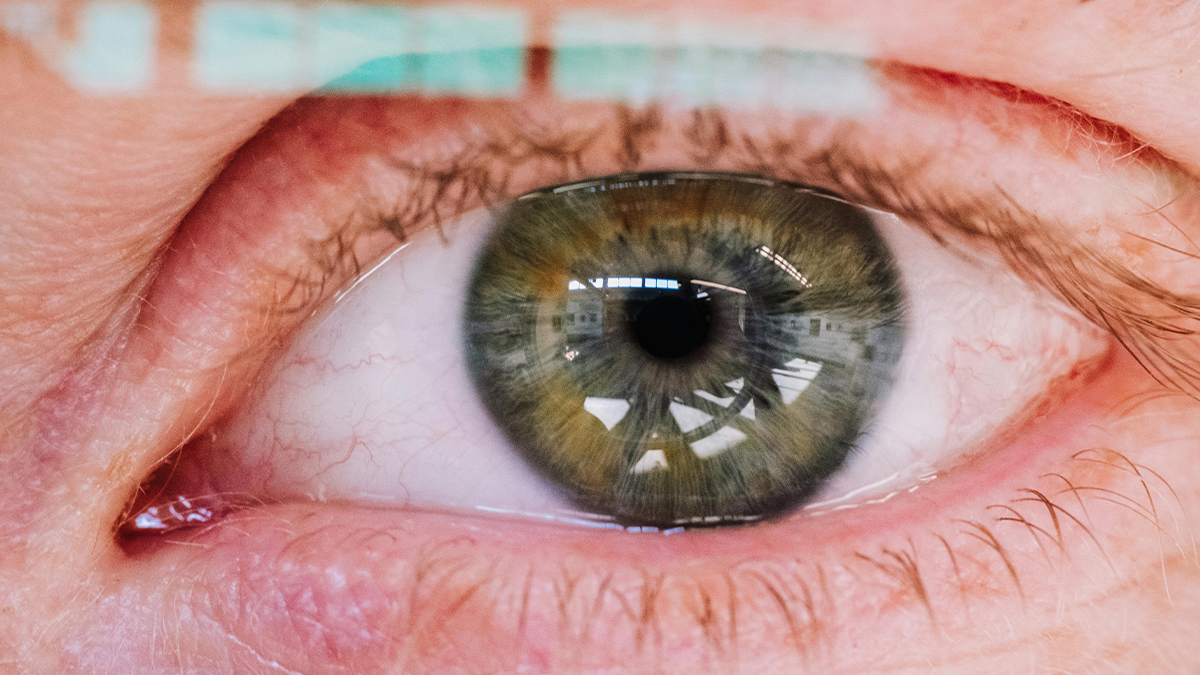
The Tobii eye tracker captures gaze data every 8 milliseconds, collecting more than 25 data points in the time it takes a person to react to a visual stimulus. The software processes that data in near real time to adapt the child’s game experience. In the Visual Behavior module, when a child’s gaze falls within the designated Area of Interest on a character’s face, an aura lights up around it and the child earns crystals, the in-game currency for unlocking mini-games. Five crystals for looking immediately when the character begins speaking; three for looking only after a prompt is delivered. Children figure out the contingency quickly.
“Kids quickly learn that they earn more game time by using their visual behavior,” Ross said. “The child’s visual behavior enables the child to control their game experience.”
The Emotion Recognition module layers a second skill onto face orientation. A character’s face appears blurred, and the child must direct gaze to the eye and mouth regions to clear it, then identify the emotion displayed. The images begin as simple line drawings and progress across ten difficulty levels toward cartoons and eventually real human faces. That progression reflects published research suggesting that children with autism attend more readily to cartoon faces than to photographs, which carry a history of social demand that these children have often learned to avoid. “They love Thomas the Train,” Schiavi noted. “It works for a reason.”
The platform also tracks cumulative face exposures: a running count of every face a child has attended to across all sessions. During a demonstration, Schiavi showed data for one anonymous child who had already accumulated 1,500 face exposures across their sessions. A separate data report he presented showed an anonymous child whose gaze landed within the Area of Interest 68 times in the first session and an average of 128 times across the five most recent sessions, a nearly doubling of orienting behavior over a relatively short treatment period.

How Lookware’s ABA Data Informs Clinical Decision-Making
Lookware is designed explicitly as a digital adjunct to ABA therapy, not a substitute. The platform is for professional use by BCBAs and special education teachers. Centers access it at no cost; parents pay per completed session at a rate Schiavi describes as below a typical insurance co-pay, only after the session is finished, with no subscription lock-in and no prepayment. As behavioral health technology adoption has accelerated across the sector, the question of how clinical tools interface with existing ABA workflows has become one of the most consequential implementation challenges providers face.
Every session ends with a structured data sheet and a live human-to-human assessment. A BCBA or therapist addresses a direct social question to the child while maintaining eye contact, and records whether the child looked and responded, looked without responding, or neither. A joint attention probe follows. The platform simultaneously delivers session-level reports to a therapist-facing app within minutes of completion, breaking down emotion recognition accuracy by specific emotion so a clinician can identify, for example, that a child is consistently struggling with “scared” and adjust programming accordingly.
“These data inform the ABA therapy,” Ross said. “They do not replace it.”
BioStream has also developed what it calls the Multisensory Assessment of Social Responding (MASR): a baseline and ongoing assessment tool that plays a series of short video clips of a human character speaking and asking questions. The eye tracker records where the child is looking, whether they shift gaze between the speaker and a referenced object, and what pupil dilation data reveals about their emotional response during the interaction. The BCBA records verbal responses simultaneously. The system compiles verbal behavior, visual behavior, pupil dilation, and on-screen gaze location into a profile that can be repeated periodically to track change over time. Ross and Schiavi describe it as the first instrument of its kind in the field.
The 2021 randomized controlled trial of Lookware, conducted across six schools and therapy centers in four U.S. metropolitan areas and published in the Journal of Autism and Developmental Disorders, compared 25 children ages 4 to 14 who used the platform against 29 matched controls who played a standard video game using the same hardware. Over approximately six weeks, with three to five sessions per week and a minimum of 15 minutes of gameplay required per session to count, the intervention group showed approximately a 25 percent improvement on the Ekman-60 emotion recognition assessment (a large effect size, partial eta-squared of 0.25), while the control group showed no meaningful change. The study was co-designed with Mary Jane Weiss of Endicott College, a prominent researcher in ABA and social skills development.
A research poster co-authored with clinicians from Bierman Autism Centers and being prepared for the 2026 ABAI annual conference extends those findings. Across multiple participants in an ongoing single-subject design, emotion recognition accuracy, total gaze time, and average gaze duration maintained or improved as the platform advanced through higher difficulty levels.
BioStream’s Roadmap: School Districts, Friendship Modules, and Predictive Analytics
BioStream is currently operating under partnership agreements with two multi-site, multi-state ABA provider organizations and is raising capital to support broader commercialization. Ross and the clinical team are developing a companion curriculum intended to translate the data Lookware generates into structured goals and exercises that therapists and parents can use outside of sessions, specifically to support generalization of the skills the platform builds.
On the product roadmap is vestibular tracking via a USB mat placed on the child’s chair, which would add a continuous measure of rocking and movement to the multisensory assessment data. Future game modules are planned around friendship behavior, turn-taking, and text-based social conversation, addressing the specific social environments where children with autism most often struggle and where current programming has the fewest tools.
For school districts, Schiavi envisions a public-private partnership model in which regional businesses sponsor Lookware access for special education programs in exchange for anonymized group outcome data. “When companies sponsor other things, there is rarely objective feedback on the actual impact. We can and will give them that,” Schiavi said.
The FDA question arises inevitably when a platform involves eye tracking and autism. Schiavi’s answer is precise: Lookware operates under FDA general wellness guidelines and is neither a diagnostic nor a treatment device. It is a skill-building tool, comparable in regulatory terms to a social skills curriculum or a flashcard set. The distinction from diagnostic eye-tracking tools that require FDA clearance is meaningful.
“We are not diagnosing or treating anything,” Schiavi said. “The most important people for these children are the BCBAs and the special education teachers. They are the ones who move the needle. This is a tool designed for them.”
What Ross keeps returning to is the gap between what ABA has always understood about social skills and what it has reliably been able to deliver at scale. Teaching an RBT to run discrete trial instruction takes a short training session. Teaching a therapist to build the layered, differential social responding a child needs to make a friend, read a room, and sustain a conversation is something else entirely.
“This software enables us to deliver social skills training at a frequency, efficiency, and accuracy that is simply not possible with even the best clinician working alone,” Ross said. “The technology does not replace clinical judgment. It gives clinicians the tools to act on it.”
Frequently Asked Questions:
What is Lookware, and how does it work in ABA therapy?
Lookware is a video game-based digital adjunctive therapeutic platform developed by BioStream Technologies that combines applied behavior analysis techniques with gaze-contingent eye tracking to teach social skills to children with autism spectrum disorder. The system consists of a preloaded gaming laptop, a Tobii® eye tracker, and a standard game controller. Children are not required to wear any sensors. During sessions, they navigate a 3D game environment in which orienting to characters’ faces earns crystals, which serve as in-game currency for unlocking mini-games. The eye tracker captures gaze data every 8 milliseconds, enabling the software to deliver immediate reinforcement when the child orients to the designated Area of Interest on a character’s face. A separate Emotion Recognition module presents characters with blurred faces that clear only when the child looks at them, then prompts the child to identify the emotion displayed. At the end of each session, all data is uploaded to a cloud server and delivered to the therapist’s app within minutes.
What did the Lookware clinical trial find?
A randomized controlled trial published in the Journal of Autism and Developmental Disorders in 2021, conducted across six schools and therapy centers in four U.S. metropolitan areas, compared 25 children ages 4 to 14 who used Lookware against 29 matched controls who played a standard video game using the same hardware. Over approximately six weeks, with three to five sessions per week, the Lookware group showed approximately a 25 percent improvement on the Ekman-60 emotion recognition assessment (a large effect size, partial eta-squared of 0.25), while the control group showed no meaningful change (F(1,52)=17.48, p<0.001). The intervention group completed an average of 578 discrete trials and was presented with an average of 2,312 faces across approximately six hours of total gameplay. A follow-up research poster being prepared for the 2026 ABAI annual conference, co-authored with clinicians from Bierman Autism Centers, extends those findings in a single-subject design across multiple participants.
Is Lookware FDA-approved?
No, and the distinction is meaningful. Lookware operates under FDA General Wellness Guidelines as a digital adjunct to ABA therapy. It is neither a diagnostic tool nor a treatment device, and therefore does not require FDA clearance. FDA clearance applies to tools that diagnose or treat diseases: for example, EarliPoint Health’s eye-tracking autism assessment platform, which generates a biomarker-based developmental profile used to support an autism diagnosis, received FDA clearance because it informs a diagnostic conclusion. Lookware does not diagnose or treat. It teaches social skills and tracks the behavioral changes that result. As CEO Harry Schiavi has explained, the decision to operate under General Wellness Guidelines also reflects a deliberate positioning choice: the platform is designed for BCBAs and special education teachers, not for physicians, and a physician-prescribed pathway would add friction without clinical benefit. Lookware may be used as part of a comprehensive social skills training program conducted by or under the supervision of a qualified, licensed or certified professional including an overall healthy lifestyle to help children live well with autism.
What is the 30 million faces gap in autism?
The “30 million faces gap” is a framework coined by Dr. Robert K. Ross of BioStream Technologies, drawn from Betty Hart and Todd Risley’s landmark 1995 research on language environments. Hart and Risley found that children raised in more language-rich environments accumulated significantly more word exposure over time, an advantage that translated into better vocabulary, stronger academic performance, and better long-term outcomes. That cumulative disparity became known as the 30 million word gap. Ross applies the same logic to social learning in autism: children on the spectrum orient to faces significantly less than neurotypical peers from early in development, and by school age a documented aversion to the eye region is well-established in the research literature. The cumulative result is a child who has processed a fraction of the face-based emotional information a typical peer has accumulated, limiting their capacity to read social cues and build relationships. Lookware’s cumulative face exposure tracking is designed to systematically begin closing that gap, with each session adding to a running count of faces the child has actively attended to.
How does Lookware compare to VR-based autism therapy tools?
Lookware was intentionally designed as non-wearable. Many children with autism cannot tolerate VR headsets, and any time spent on device tolerance training is time taken directly from instruction. By positioning the child in front of a screen rather than inside a headset, Lookware eliminates that barrier entirely. In an internal survey of 127 children who completed approximately 600 game sessions, 98 percent reported they either liked the game or liked it a lot. The platform’s gaze-contingent eye tracking operates without any physical contact with the child, making it accessible to a substantially wider range of learners than wearable alternatives. The broader conversation about AI and VR tools in ABA has increasingly surfaced tolerance and sensory access as underappreciated implementation variables.
How much does Lookware cost, and is it covered by insurance?
Lookware is available to ABA therapy centers at no cost. Parents are charged per completed session at a rate below a typical insurance co-pay, and only after each session is finished. There is no subscription requirement and no prepayment. Because ABA reimbursement covers clinical time rather than tools (flashcards, curricula, and similar materials are not separately billed), Lookware is not currently reimbursable through Medicaid or private insurance. BioStream is developing compassionate use slots, in which centers with sufficient volume of paying families receive a set of free session allocations for families who cannot afford the per-session fee. A corporate sponsorship model is also under development, in which businesses provide funding to support access in specific geographic areas and receive impact results in return. As ABA operators navigate an increasingly cost-constrained reimbursement environment, access models that decouple technology costs from the clinical billing cycle may prove an important structural innovation.