Key Takeaways
- The TRICARE Autism Care Demonstration, now in its twelfth year, still covers ABA services under a demonstration authority rather than as a basic TRICARE benefit, imposing administrative requirements and care-setting restrictions that standard coverage does not. Military families report barriers to consistent care across relocations and deployments.
- The T-5 contract transition that shifted the TRICARE West Region to TriWest Healthcare Alliance on January 1, 2025 created access disruptions throughout 2025, including repeated extensions of credentialing and referral deadlines, with providers serving military families under the Autism Care Demonstration among those most affected.
- Direct support professionals (DSPs) who provide hands-on care for autistic adults in community settings have no recognized occupational code in the federal Standard Occupational Classification system, leaving policymakers without the workforce data needed to address chronic staffing shortages and high turnover.
- The federal home and community-based settings rule under the 1915(c) waiver is interpreted inconsistently across states: some recognize campus-based intentional communities as compliant settings for adults with disabilities, while others do not, limiting housing options for autistic adults to group homes, indefinite family residence, or more restrictive placements.
- In September 2025, the National Academies of Sciences, Engineering, and Medicine released an independent report concluding that ABA meets the Department of Defense’s own evidentiary standards and should be authorized as a TRICARE basic benefit, with recommendations to eliminate burdensome mandatory assessments and make caregiver training optional.
- Two bipartisan bills before the 119th Congress would require the Office of Management and Budget to establish a formal occupational code for direct support professionals in the Standard Occupational Classification system, providing the data infrastructure to track supply, demand, and compensation for this workforce.
- CASP held its second annual DC Fly-In on March 25, 2026, bringing 75 member organizations to Capitol Hill. A third fly-in is already in planning for the first or second quarter of 2027.
- Federal advocacy offers an efficiency that state-by-state campaigns cannot: a single CMS directive or federal statute can establish consistent policy across all 50 Medicaid programs simultaneously, reducing the advocacy burden that falls on provider organizations working across multiple states.
- CASP VP of Government Affairs Mariel Fernandez argued that the most accessible form of advocacy for individual providers requires no trip to Washington: clinical excellence, defensible documentation, and treatment plans grounded in individualized medical necessity are the foundation on which federal and state policy change is built.
- CASP’s lobbying team maintains year-round bipartisan presence in Washington, and membership gives provider organizations access to advocacy infrastructure, best-practice resources, and policy guidance on navigating the current regulatory environment.
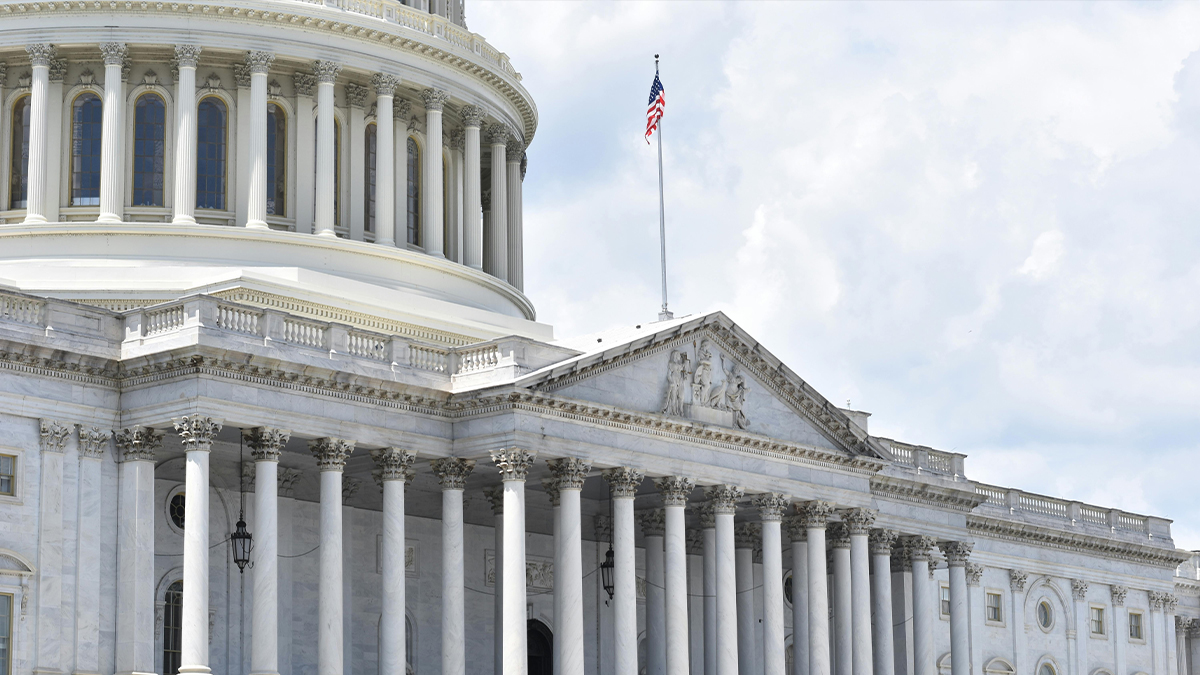
On March 25, 2026, 75 autism service providers descended on Capitol Hill for what has quietly become one of the ABA industry’s most efficient annual exercises in self-interest: the Council of Autism Service Providers’ DC Fly-In. The event, now in its second year, brought provider organizations from across the country to Washington to meet directly with their senators and House representatives, armed with briefing materials, personal stories from the clinic floor, and a tightly focused list of asks. Advocacy training was available for first-timers. The agenda was calibrated to the political realities of a city where the autism community, despite considerable bipartisan goodwill, still has to compete for attention against everything else.
Mariel Fernandez, CASP’s Vice President of Government Affairs, has been the architect of both fly-ins. A behavior analyst by training with more than twenty years in the field, she came to CASP after serving as a Regulatory Affairs Specialist at Blue Sprig Pediatrics, where she led regulatory affairs and legislative initiatives across nineteen states. She describes federal advocacy with the same behavioral vocabulary she would apply to any reinforcement problem: identify what motivates the person across the table, build rapport over repeated visits, and make the ask when the relationship is ready to support it. “Behavior is behavior is behavior,” she said after the event. “If I can influence and change the behavior of a child with autism by understanding the science of behavior analysis, I can also influence and change the behavior of regulators and legislators by understanding the same thing.”
The fly-in arrived at an unusual moment for the autism policy landscape. Federal attention to autism has rarely been higher, though not always for reasons the provider community welcomes. The appointment of Robert F. Kennedy Jr. as Secretary of Health and Human Services has generated significant uncertainty around research priorities and agency direction. Federal and state audits have identified hundreds of millions of dollars in improper Medicaid ABA payments, giving payers institutional cover for tighter scrutiny. Against that backdrop, CASP’s calculation in flying providers to Washington was partly defensive: establish relationships now, before the regulatory environment hardens around assumptions the field has not had the opportunity to contest.
TRICARE ABA Coverage and the NASEM Report: What the Pentagon Has Been Asked to Do and Why It Matters for Military Families
At the top of CASP’s federal agenda this year, as it was last year and as Fernandez expects it to remain until resolved, is TRICARE and the Department of Defense’s Autism Care Demonstration. The issues are two distinct problems that have converged into a single sustained advocacy effort. The first involves the operational fallout from the T-5 contract transition, which transferred administration of the TRICARE West Region from Health Net Federal Services to TriWest Healthcare Alliance on January 1, 2025. The transition affected nearly 2.8 million beneficiaries and generated access disruptions for providers and families throughout 2025, including repeated extensions of credentialing and referral deadlines in the western region as the new contractor worked through network enrollment backlogs. Providers serving military families under the Autism Care Demonstration were among those most affected.
The second issue is both older and more consequential in the long run. The TRICARE Autism Care Demonstration, established in 2014 and extended through 2028, covers ABA services for TRICARE-eligible beneficiaries under a demonstration authority rather than as a basic benefit, a distinction with significant practical consequences. Demonstration coverage comes with administrative requirements, assessment mandates, and restrictions on care settings and delivery modalities that standard TRICARE coverage does not impose. Providers and military families have argued for years that these requirements create unnecessary barriers and do not reflect how ABA is actually delivered.
In September 2025, a congressionally mandated independent review gave those arguments substantial institutional weight. The National Academies of Sciences, Engineering, and Medicine released its report, “The Comprehensive Autism Care Demonstration: Solutions for Military Families,” concluding that ABA meets the Department of Defense’s own evidentiary standards and should be authorized as a TRICARE basic benefit. The report recommended eliminating mandatory assessments that do not support treatment planning, discontinuing the use of two specific standardized instruments (the Parenting Stress Index and the Stress Index for Parents of Adolescents) that had been widely criticized by providers, and making certain caregiver training components optional rather than required. As of the Fly-In date, the Defense Health Agency had indicated it was reviewing the report to determine its path forward.
For CASP, pressing congressional offices to encourage the Pentagon to act on the NASEM recommendations is the immediate task. The goal is to convert a well-received independent report into actual policy change, and the Fly-In gave providers the opportunity to make that case directly to the offices with oversight responsibility. “TRICARE was number one on our list,” Fernandez said, “and it will be number one on our list until we get both of those items fully resolved.”
Direct Support Professionals, the IDEA Budget, and the HCBS Settings Rule: CASP’s Federal Agenda Beyond ABA
One of the more consequential clarifications Fernandez offered during the fly-in debrief was about what CASP is and is not. The organization has approximately 450 member organizations and is not, as its name might suggest, exclusively an ABA trade association. Its federal priorities reflect that breadth, and the 2026 fly-in agenda covered a range of issues that matter to providers serving autistic individuals from diagnosis through adulthood.
On the workforce front, CASP pressed support for two pending bills in Congress that would establish formal Department of Labor designations for direct support professionals at the Bureau of Labor Statistics. The practical value of such recognition is substantial: standardized occupational categories give the federal government the data infrastructure to track supply, demand, compensation, and job descriptions for a workforce that is chronically understaffed and underpaid, particularly for the adults who age out of school systems and can no longer live at home. The ABA industry’s own workforce shortages have documented how credentialing delays and high technician turnover constrain service capacity; the problem is even more acute for direct support professionals serving autistic adults in community settings, where the absence of BLS data makes the economic case for adequate funding nearly impossible to build.
CASP also used the visit to thank appropriators for protecting the Individuals with Disabilities Education Act and Section 504 of the Rehabilitation Act, and Title IV of the Workforce Innovation and Opportunity Act in recent federal budget legislation, a relatively unusual use of advocacy time that Fernandez described as deliberate relationship maintenance. Letting congressional offices know that their votes on disability funding are noticed and valued, she argued, builds the kind of goodwill that makes future asks easier to land.
Two other agenda items addressed less frequently discussed structural concerns. The first involved the reclassification of certain professional degrees that are no longer recognized as qualifying professional programs under federal policy, a change that is shrinking the pool of nurses, speech therapists, and occupational therapists, amongst other professions, available to serve individuals with complex needs, including those with autism diagnoses. The second involved the federal home and community-based settings rule, established under the 1915(c) waiver framework, which governs what qualifies as a community-based residential setting for adults with disabilities. The rule leaves significant discretion to states, and states interpret it inconsistently: some recognize campus-based or intentional community settings as valid home and community-based options, while others do not, effectively limiting adults with autism and other developmental disabilities in those states to group homes, indefinite residence with family, or more restrictive institutional placements. CASP’s position is that additional federal guidance or regulatory clarification could resolve these inconsistencies without requiring congressional action.
Why Federal ABA Advocacy Can Accomplish in One Step What State-Level Campaigns Require Fifty Times Over
CASP’s argument for why provider organizations should invest time in federal advocacy, even when most of the regulatory action affecting their daily operations happens at the state level, comes down to arithmetic.
State-by-state billing code disputes illustrate the problem vividly: addressing a concurrent billing restriction in one state requires the same process as addressing it in all fifty. A single CMS directive, by contrast, can establish a consistent policy across every Medicaid program in the country simultaneously. “We only have to do that once,” Fernandez said. “We don’t have to go and do that 50 times.”
The arithmetic matters at a moment when the ABA workforce shortage is already limiting provider capacity. Organizations stretched thin by credentialing backlogs, high technician turnover, and thin Medicaid margins have limited advocacy bandwidth. Federal wins that cascade to the state level offer a more efficient return on that bandwidth than the same effort applied state by state. And in states like New York, where Medicaid ABA rate cuts are arriving in stages, having a federal floor matters: a directive from CMS setting minimum adequacy standards would constrain what states can do unilaterally.
Fernandez was candid about the time horizons involved. Federal change happens slowly, and much of what CASP has accomplished in its first two fly-ins is relationship-building rather than legislation: getting into offices, explaining what the field does, and becoming a trusted source of information before any specific ask arrives. “A lot of what we have been doing so far is laying the foundation,” she said. “So that when we do come to an office and say, it’s time to draft a bill, they know who we are. We’ve been in to see them many times.” The first fly-in produced at least one outcome that CASP considered a meaningful win. Among the federal priorities CASP had been pressing was the inclusion of the ABA and adaptive behavior service CPT codes on the approved telehealth list. From 2020 through 2025, those codes had sat on a temporary telehealth list, and a statutory technicality had limited CMS’s authority to add provider types to a permanent list. Rather than pursuing a legislative fix, CMS resolved the issue structurally in the 2026 Medicare Physician Fee Schedule: it eliminated the temporary and permanent distinction entirely, replacing it with a single list of codes approved for telehealth delivery, accompanied by a requirement that qualified health professionals use clinical judgment to determine whether telehealth is appropriate for each individual patient. The ABA and adaptive behavior service CPT codes are on that list. The MPFS applies beyond Medicare: it carries implications for Medicaid coverage across all 50 states and can influence commercial payer policy, and it gives providers a clear federal reference point for telehealth parity arguments in state-level negotiations. That issue, Fernandez said, no longer required the same level of focus in 2026.
The political environment complicates the calculus but does not, in Fernandez’s telling, fundamentally change the approach. She described a deliberate practice of entering every congressional office without discernible personal political alignment, identifying what the member or staffer cares about, and translating the CASP message into terms that resonate with those priorities. For offices on the left, that might mean leading with the human consequences of access barriers for children and families. For offices on the right, it might mean leading with the long-term fiscal argument: early intervention reduces lifetime costs. The science and the policy ask remain the same. The framing shifts.
“If I can get you engaged with what I’m sharing so that it’s important and meaningful,” she said, “that’s not going to change no matter who we’re talking with, no matter how we’re advocating.” She added, with some evident feeling, that she has spent fifteen to twenty years doing this work in Texas, a state she described as among the most challenging in the country for autism service providers, and has been part of advocacy efforts she considers genuinely successful there. “If you can do it in Texas in our political climate, you can do it anywhere.”
Clinical Excellence as ABA Advocacy: Why Fernandez Says the Most Powerful Step Starts in the Clinic, Not Washington
The closing message Fernandez offered to providers who will never attend a fly-in was arguably the most practically useful part of the conversation. At a moment when the ABA field is contending with a narrative about fraud, waste, and abuse that has reached major national publications and is influencing both payer behavior and federal oversight priorities, she argued that the most powerful advocacy tool available to individual clinicians is the quality of their own clinical work.
“Am I developing a treatment plan that is addressing things that are socially significant for this individual?” she said. “Am I really focused on their progress and their goals? Am I making requests of the payer that are consistent with what I have demonstrated as medically necessary for this individual? Do I understand why I’m asking for what I’m asking for?” She encouraged providers to start there, before thinking about state-level or federal advocacy, because clinical documentation that clearly supports medical necessity changes what is possible at every level above it.
The argument has a direct structural logic. Federal and state audits have identified improper Medicaid ABA payments in the hundreds of millions of dollars, and those findings have given both payers and oversight agencies institutional cover for tighter scrutiny and more restrictive billing policies, some of which go well beyond what the audit evidence directly supports. The response Fernandez is advocating is not defensive posturing but a genuine shift in practice: if providers across the field can demonstrate that their documentation is beyond reproach and their treatment recommendations are clearly grounded in individualized medical necessity, the evidentiary basis for broad restrictive policies weakens.
She connected this directly to the accountability era that is reshaping autism care: accreditation through bodies like the Autism Commission on Quality, clinical quality measurement, and the CASP practice guidelines are all tools through which providers can demonstrate the very thing that billing ratio audits cannot capture, that care is actually being delivered in a clinically appropriate way. “If we make sure that our clinical quality is beyond reproach and we can clearly demonstrate what we’re asking for and why, it has a big ripple effect upwards,” she said. “Every single individual in the field who’s in a position to help make those decisions is in a position to help change the narrative at a state and federal level.”
For providers who do want to engage at a policy level, Fernandez’s practical recommendation was to consider joining CASP, which she described as giving members both the community to discuss best practice and the infrastructure to influence policy and regulation, whether at the state capital or in Washington. A third fly-in is already in planning for the first or second quarter of 2027. The dates are not yet set.
Frequently Asked Questions
What is the CASP DC Fly-In, and what happened at the 2026 event?
The CASP DC Fly-In is an annual advocacy event organized by the Council of Autism Service Providers in which member provider organizations travel to Washington to meet directly with their senators and House representatives. The 2026 fly-in, held on March 25, was the second such event (the first took place April 3, 2025) and drew 75 providers. CASP provides advocacy training for participants who are new to congressional engagement and works alongside a bipartisan federal lobbying team. A third fly-in is planned for the first or second quarter of 2027. The five priority areas the 2026 event addressed were: TRICARE and the Autism Care Demonstration; DOL recognition for direct support professionals; the Individuals with Disabilities Education Act budget; reclassification of professional degree programs; and the federal home and community-based settings rule.
What is the TRICARE Autism Care Demonstration, and why does CASP want it converted to a basic TRICARE benefit?
The TRICARE Autism Care Demonstration is a Department of Defense program established in 2014 and extended through 2028 that covers applied behavior analysis services for TRICARE-eligible beneficiaries diagnosed with autism. Because ABA is covered under demonstration authority rather than as a standard basic benefit, it carries administrative requirements, mandatory assessments, and care-setting restrictions that standard TRICARE coverage does not impose. In September 2025, the National Academies of Sciences, Engineering, and Medicine released a congressionally mandated independent report concluding that ABA meets the Department’s own evidentiary standards and should be authorized as a basic TRICARE benefit. The report recommended eliminating specific mandatory assessments (including the Parenting Stress Index and Stress Index for Parents of Adolescents), making caregiver training optional, and allowing greater flexibility in care settings and delivery. CASP’s federal advocacy has focused on pressing the Pentagon and Congress to implement those recommendations, while also working to resolve ongoing access disruptions created by the T-5 contract transition to TriWest Healthcare Alliance, which took effect January 1, 2025.
What are the direct support professional bills before Congress, and why do they matter for autism providers?
Two bipartisan bills in the 119th Congress (the Recognizing the Role of Direct Support Professionals Act, with companion House and Senate versions) would require the Office of Management and Budget to establish a discrete occupational code for direct support professionals in the federal Standard Occupational Classification system. DSPs provide hands-on daily care for adults with autism, intellectual disabilities, and other developmental disabilities in community and residential settings. Because DSPs currently have no recognized occupational category in the federal SOC system, there is no standardized federal data on workforce size, turnover, compensation, or geographic shortages. This makes it difficult for policymakers to design targeted recruitment, training, and retention strategies, or to build the economic case for adequate public funding. The ABA industry’s own credentialing and staffing constraints provide a preview of what happens when workforce data is inadequate: without the infrastructure to measure the problem, it is nearly impossible to solve it.
Why does CASP prioritize federal advocacy when most ABA policy happens at the state level?
CASP’s rationale rests on scale. State-level billing and coverage disputes illustrate the challenge: addressing a policy problem in one state requires the same advocacy process as addressing it in all fifty. A single federal directive from CMS or another agency can establish consistent policy across every Medicaid program in the country simultaneously, delivering in one step what fifty separate state campaigns would require. Federal wins also create a floor of standards that constrains what states can do unilaterally, and in an environment where states are cutting Medicaid ABA rates independently, a federal standard matters. CASP acknowledges that federal change is slow, and that much of its current congressional work is relationship-building in advance of specific future legislative asks. The organization maintains a year-round bipartisan lobbying presence in Washington alongside its member-driven annual fly-ins.
How does Mariel Fernandez recommend individual ABA providers approach advocacy without going to Washington?
Fernandez argues that clinical excellence is the most accessible and foundational form of advocacy available to individual providers. Her recommendation: focus on developing treatment plans that address socially significant goals, document medical necessity clearly and defensibly, and be prepared to explain and defend recommendations to payers. The argument is structural: federal and state audits identifying improper ABA payments have provided payers and oversight agencies with institutional cover for restrictive billing policies that often go further than the audit evidence warrants. Providers who can demonstrate clinical rigor in their own practices contribute to shifting that narrative, weakening the evidentiary basis for broad restrictive policies industry-wide. Fernandez also points to the accountability era taking shape in autism care, including ACQ accreditation and the CASP practice guidelines, as tools that allow providers to demonstrate what billing ratio audits cannot capture: that care is actually being delivered in a clinically appropriate way. For providers who want to engage at the policy level, she recommends considering CASP membership as a way to access advocacy infrastructure and best-practice resources.
What is CASP and who are its members?
The Council of Autism Service Providers is a nonprofit trade association founded in 2016 with approximately 450 member organizations. CASP’s membership is not limited to ABA providers: it represents organizations delivering a range of autism services across the lifespan, from early intervention through adulthood. Member organizations include ABA clinics, multi-specialty practices, and providers offering occupational therapy, speech therapy, and residential and community support services. CASP maintains the CASP Applied Behavior Analysis Practice Guidelines (the generally accepted standards of care for ABA, as endorsed by entities including the Department of Defense’s own oversight framework) and administers the Autism Commission on Quality (ACQ), which provides accreditation for ABA provider organizations. Massachusetts has already required ABA providers to obtain ACQ accreditation by January 2027. CASP advocates at both the federal and state levels and maintains a bipartisan professional lobbying team in Washington. For providers and organizations interested in the policy infrastructure Fernandez described, information on CASP membership is available at casproviders.org.